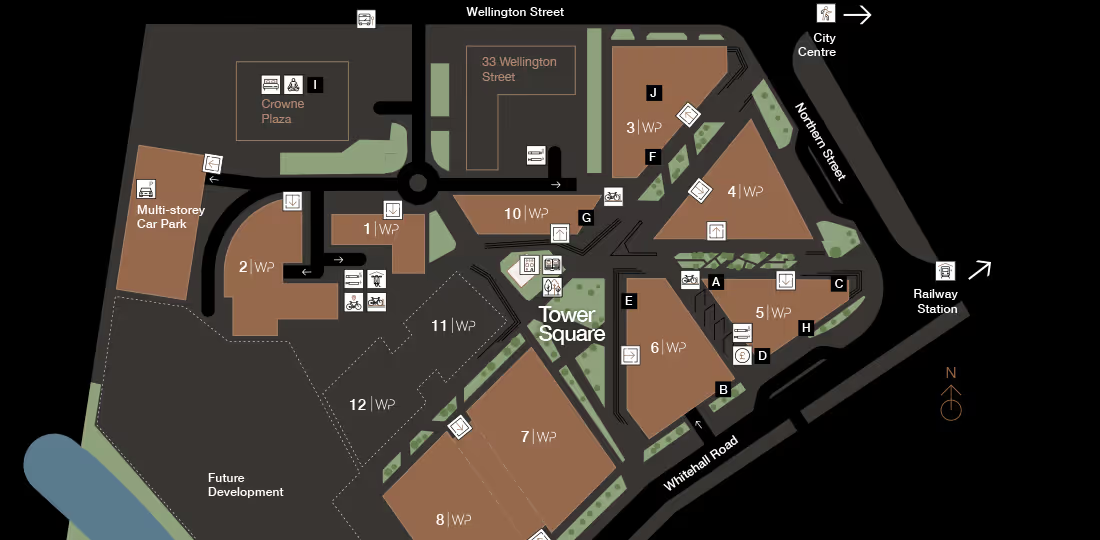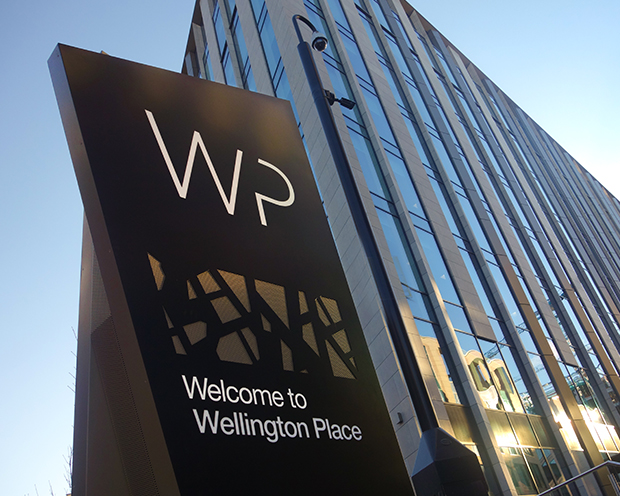
We’ve been saying it for years, but now we’re finally noticing that strategic wayfinding is being recognised for its role, early doors, in supporting high level masterplanning and planning proposals.
Increasingly, we’re seeing local planning authorities asking for information on wayfinding upfront, through pre-commencement planning conditions, or even sooner at the masterplanning stage.
It’s the right approach.
Planners up and down the country now expect developers to show they’ve thought about how people will move through and experience a space, and how they’ll encourage active travel.
When left to later stages, new developments can function like isolated islands, easy to walk past and sometimes even hard to find your way into. That’s where a wayfinding strategy comes in, and by setting it as a requirement through a planning condition, planners are making sure it happens.
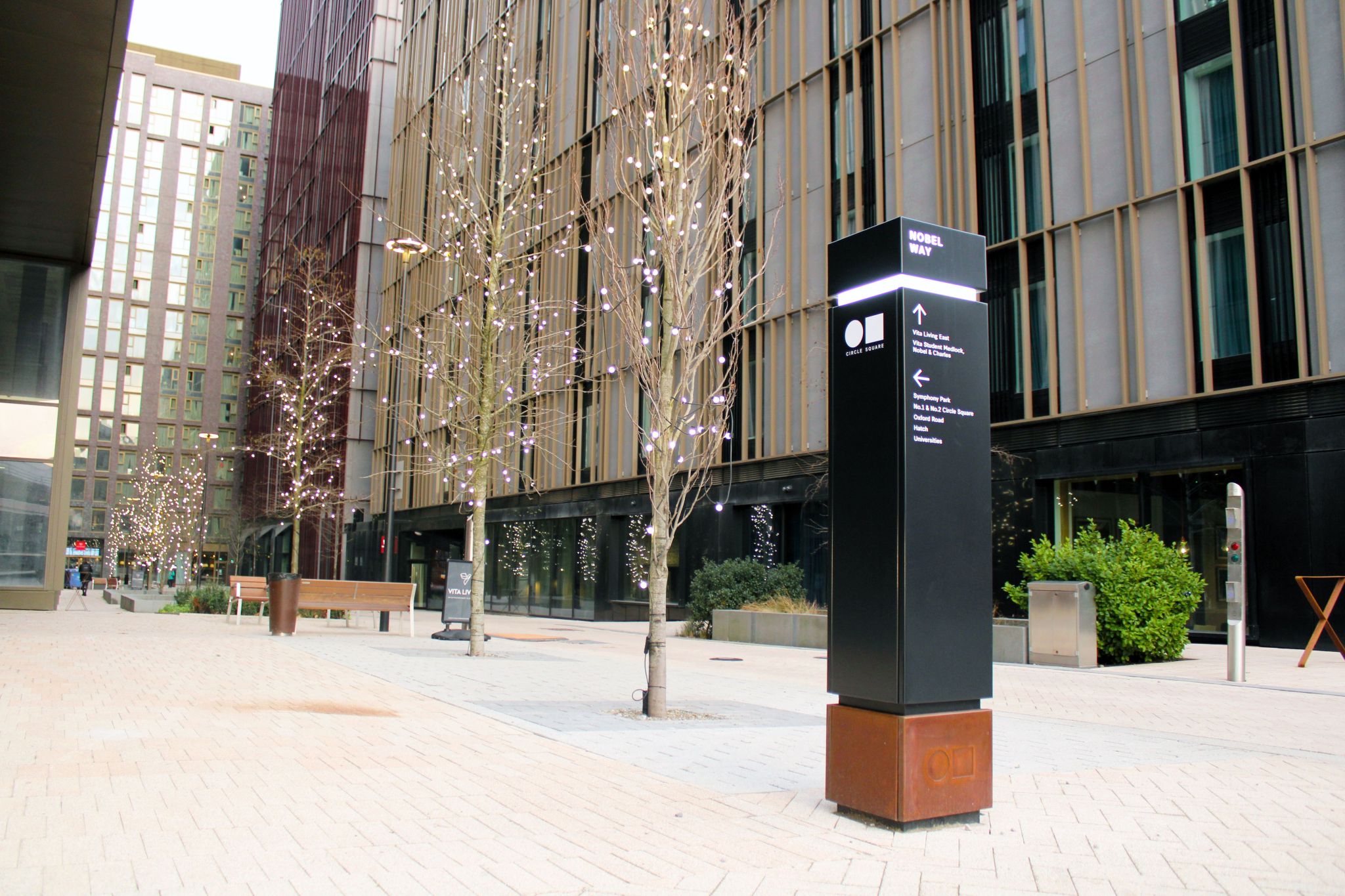
This is at the crux of good placemaking. It’s not enough for a development to be well designed and function well internally. It needs to connect with what’s around it. Wayfinding strategies submitted to meet the requirements of planning conditions demonstrate that the developer has considered:

Often, a brand new development can feel void of life or lack a unique identity. A wayfinding strategy helps establish the character of a place, taking a wide lens view of a place to understand its context and unique offer. We dig under the surface to uncover a place’s unique stories. And we consider how to reinforce a place’s brand (particularly at key arrival points and focal points), setting the tone for how the place will be understood and experienced.
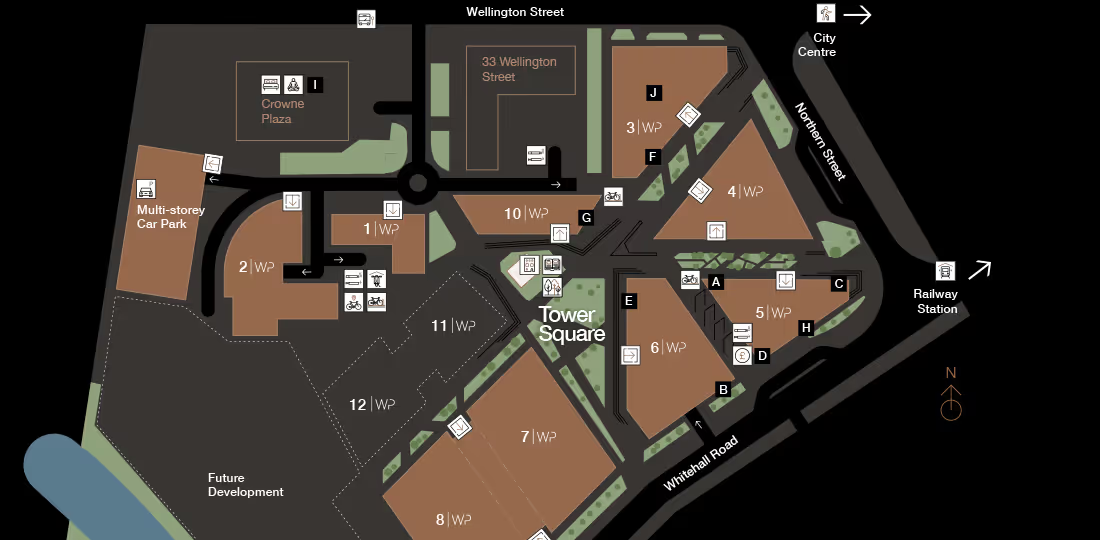
Tying wayfinding into the early, planning stages of placemaking helps to connect the dots with the bigger picture, guiding developers to not just respond to what’s there today but what’s planned for the future.
Planners will be looking to see how a development – whether a phase of a larger scheme, or an isolated development – will work with longer-term plans for a neighbourhood, or indeed adjacent neighbourhoods, particularly in terms of connectivity and supporting active travel.
Our wayfinding strategy for The Fairfax crucially connected the dots for how the development related to the Portugal Street East neighbourhood (an emerging district within the Piccadilly East regeneration area). The wayfinding strategy will become a useful reference tool for developers, architects, landscape designers and even future estate managers, helping everyone pull in the same direction to get the best outcome for a place.
All these things are essential ingredients to great placemaking.
Getting the strategy right before a spade hits the ground brings reassurance, both to the local authority and existing communities, that the development won’t be inward-looking but has considered how it fits into the wider area.
And this is what the local planning authority is looking for before it signs off that pre-commencement planning condition.
Get it right, and you’ve one more condition knocked off the list and you’re one step closer to getting work moving on site.
Wayfinding is far more than a well-crafted sign. It’s a planning tool. It demonstrates thoughtfulness and an understanding that new development must look beyond its own red line boundary. It demonstrates that places are, ultimately, for people.
Local planning officers are increasingly demanding that developments connect the dots, by frontloading this requirement onto planning permissions.
So, after you’ve recovered from reading the sheer number of conditions on your recent decision notice, and you’ve spotted one seeking details of a wayfinding strategy, we can help.
Our wayfinding strategies are used to support everything from outline planning submissions to detailed reserved matters. Crucially, they help move planning permissions forward, demonstrating how schemes align with local policy priorities for walkability, accessibility, safety and place identity.
Get in touch if you'd like to talk about a strategic approach that brings clarity – to planners and future users alike.